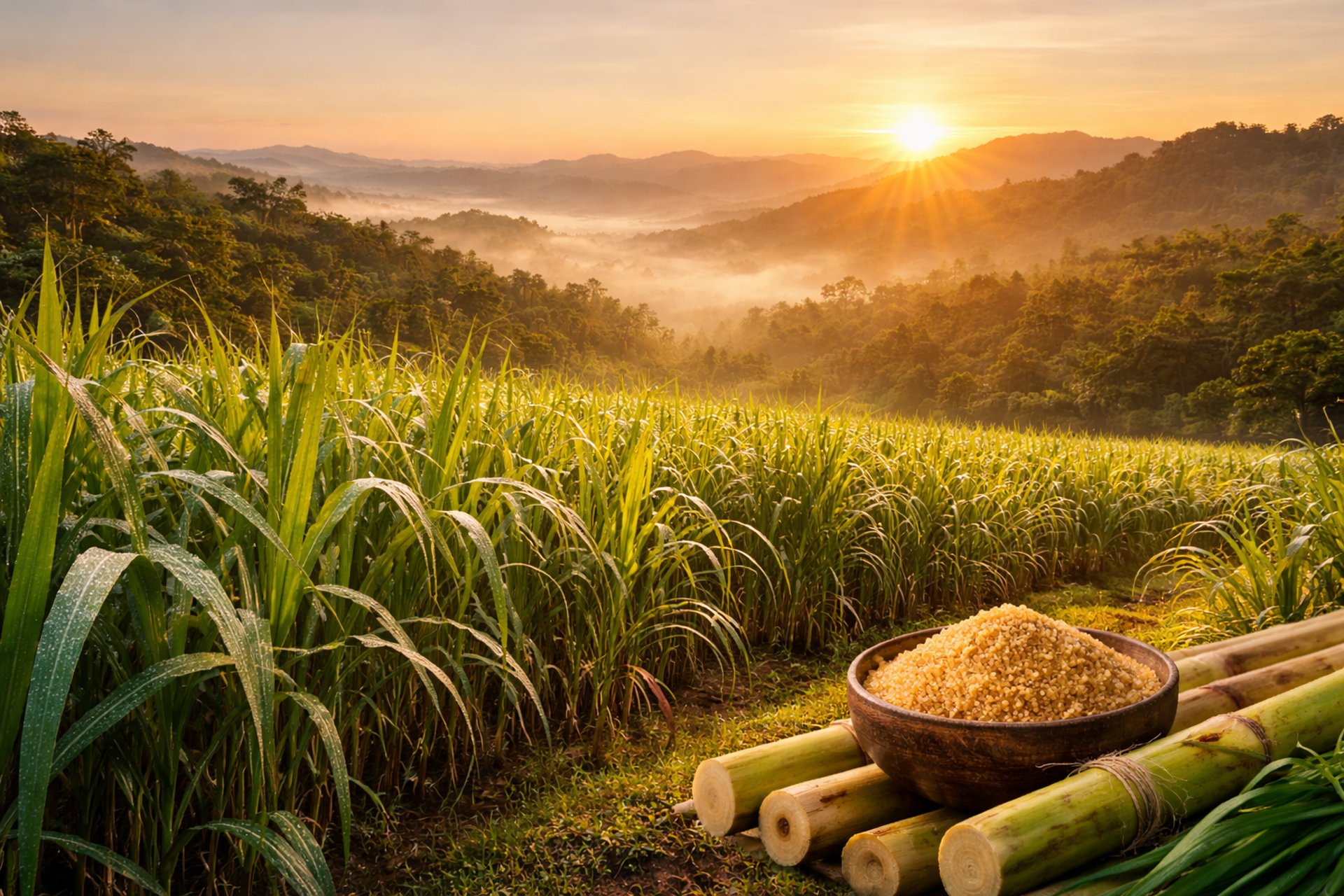
🌿 Laahrong Brown Sugar — Natural Sweetness from Chittagong Hill Tracts Sugarcane
Jum Cultivation in Bangladesh: Traditional Farming in the Chittagong Hill Tracts
Learn about Jum cultivation, the traditional farming method of the Chittagong Hill Tracts, where mixed crops like rice, turmeric, ginger, and sugarcane are grown naturally on hill slopes.
Tuhin Kanti Chakma
4/10/20262 min read
Jum Cultivation in the Chittagong Hill Tracts: Traditional Farming Explained
Introduction
In the hills of the Chittagong Hill Tracts (CHT), farming is not just a way of producing food — it is a way of life passed down through generations.
Among the indigenous communities, one of the oldest and most meaningful agricultural practices is Jum cultivation. Rooted in tradition, guided by nature, and sustained by community knowledge, Jum cultivation reflects a deep connection between people and the land.
What is Jum Cultivation?
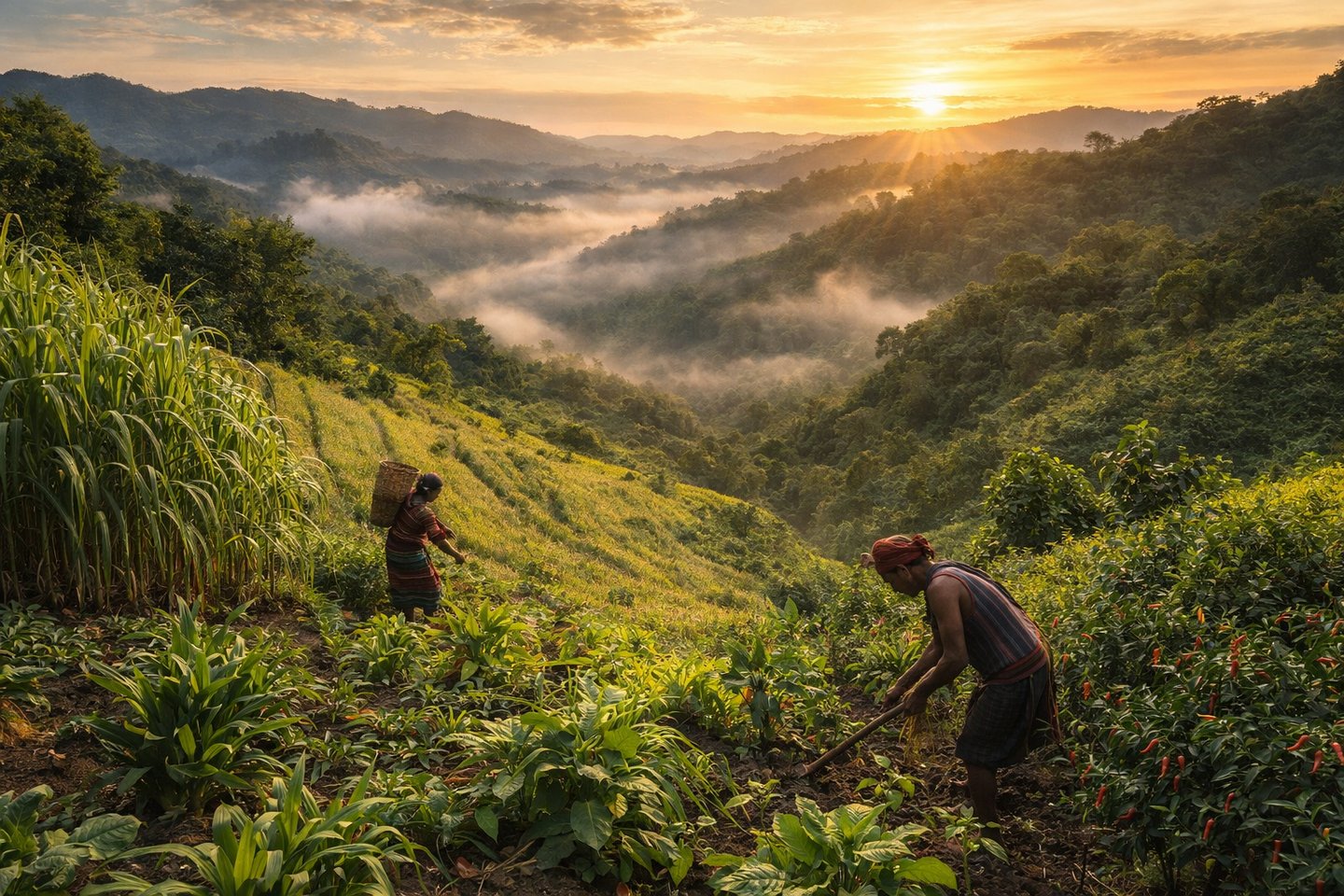
Jum cultivation, also known as shifting cultivation, is a traditional farming method practiced on hill slopes.
Instead of farming the same land continuously, communities:
Use a piece of land for a few seasons
Then leave it to naturally regenerate
Move to another area for cultivation
This cycle allows the soil to recover and maintains ecological balance.
How Jum Cultivation Works
Jum cultivation follows a natural seasonal cycle that has been practiced for generations.
Step-by-Step Process
1. Land Selection
Farmers select a hill slope based on soil quality, vegetation, and previous use.
2. Clearing the Land
Small trees and bushes are cut, keeping large trees when possible.
3. Controlled Burning
The cleared vegetation is burned carefully, creating natural ash that enriches the soil with nutrients.
4. Mixed Crop Planting
Different crops are planted together in the same field, without chemicals or artificial fertilizers.
5. Harvesting
Crops are harvested at different times, ensuring a continuous supply of food.
Crops Grown in Jum Cultivation
One of the most unique aspects of Jum cultivation is diversity. Multiple crops grow together in harmony.
Common Crops Include:
Rice 🌾
Maize 🌽
Chili 🌶️
Ginger 🧄
Turmeric 🌿
Vegetables and fruits 🍆
Sugarcane 🍬 (key for Laahrong)
This mixed cropping system reduces risk, improves soil health, and supports biodiversity.
Why Jum Cultivation is Sustainable
Jum cultivation is often misunderstood, but traditionally, it is a balanced and sustainable system.
Key Benefits
Natural soil enrichment through ash
No chemical fertilizers or pesticides
Biodiversity through mixed crops
Land regeneration through fallow periods
Low environmental impact
It reflects a deep understanding of ecological cycles.
Challenges Facing Jum Cultivation Today
Modern pressures have affected this traditional system.
Current Challenges
Reduced land availability
Shorter fallow cycles
Population growth
Environmental changes
Transition to modern agriculture
These challenges make it harder to maintain traditional practices in their original form.
The Cultural Importance of Jum
Jum cultivation is not just agriculture — it is part of identity.
It Represents:
Community cooperation
Seasonal rituals and traditions
Indigenous knowledge systems
A deep respect for nature
For many communities in the CHT, Jum is life itself.
Connection to Laahrong
Laahrong is inspired by this tradition.
Our brown sugar comes from sugarcane grown in the hills, often as part of traditional and natural farming systems like Jum cultivation.
What Makes It Special
Grown in natural environments
Free from heavy chemical processing
Rooted in traditional knowledge
Connected to the land and people
Every grain of Laahrong carries the story of the hills —
a story of nature, culture, and tradition.
Why This Matters Today
In today’s world of industrial farming and processed food, Jum cultivation reminds us of something powerful:
Food can be natural, sustainable, and meaningful.
It is not just about production — it is about balance.
Conclusion
Jum cultivation stands as a symbol of traditional wisdom in the Chittagong Hill Tracts.
It shows how humans can live in harmony with nature — growing food while preserving the land for future generations.
Through Laahrong, we bring a part of this tradition to your home.
Experience Natural Sweetness
Taste the purity of traditionally grown sugarcane from the hills.
Laahrong Brown Sugar — Inspired by Tradition, Crafted by Nature.
LAAHRONG
Naturally crafted brown sugar from the Chittagong Hill Tracts — pure, unrefined, and made with care.
Contact
Manufactured BY
laahrong@gmail.com
+88018861234
© 2026. All rights reserved.
CKH Manufacturing co-operative society limited, kamalchari, khagrachari 4400